
Concrete Walkway Installation Cost: What to Expect
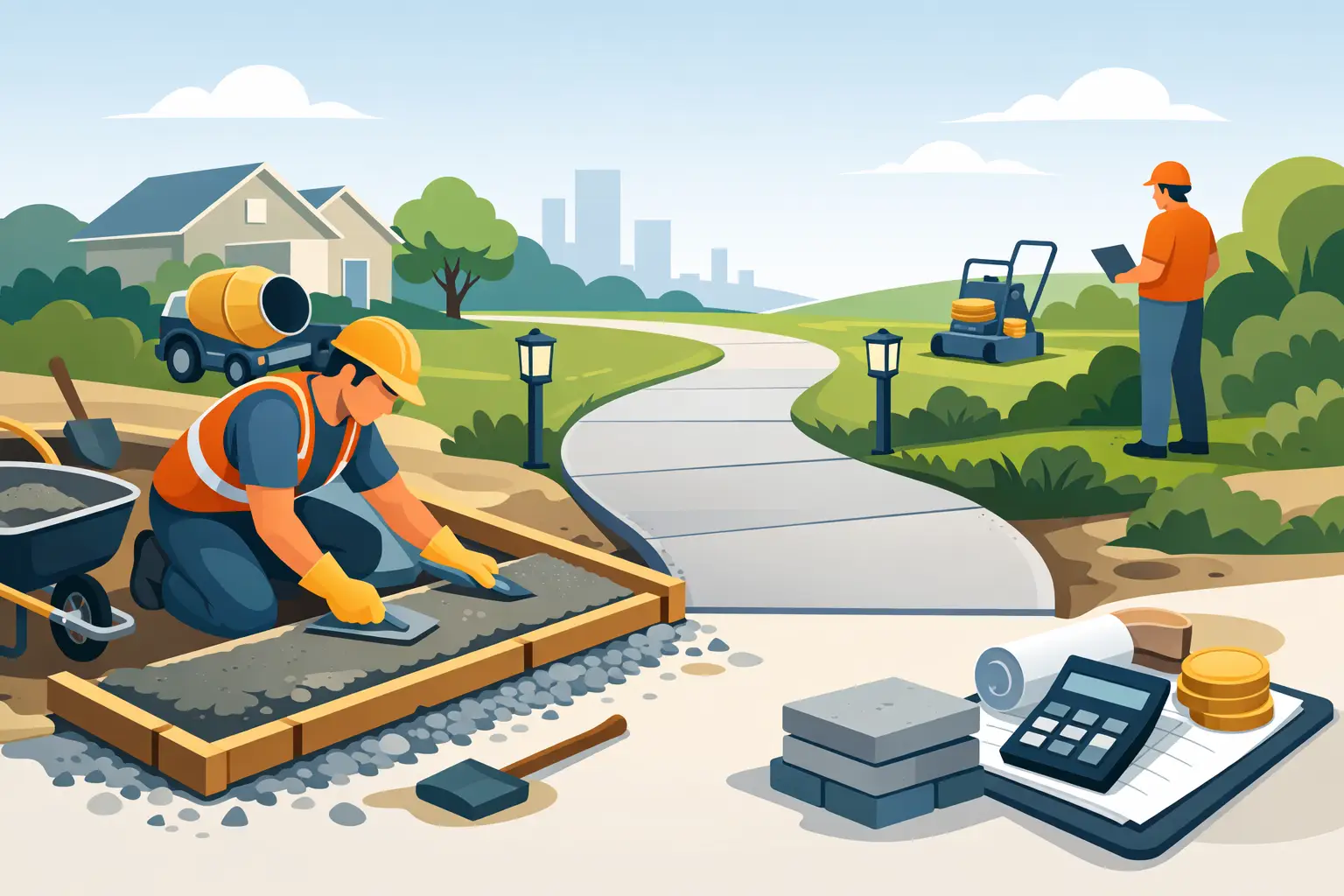
A narrow path from the driveway to the front door can look like a small project. Then the old concrete has to be removed, tree roots show up, a gate limits wheelbarrow access, and the walkway needs to match existing grades. That is why concrete walkway installation cost is not just a square-foot question. The finished surface matters, but so does everything underneath it.
For homeowners in Orange County and Mohave County, a professionally installed walkway commonly starts with a site-specific quote rather than a flat advertised rate. Small concrete jobs often carry a higher per-square-foot price because mobilization, forming, equipment, delivery, and cleanup are still required whether the path is 40 square feet or 400.
What Does Concrete Walkway Installation Cost?
For a basic broom-finished concrete walkway with reasonable access and minimal site issues, a planning range of roughly $10 to $20 per square foot is often realistic for professional installation. Small walkways may land above that range because there is a minimum cost to properly set up and complete the work. Decorative finishes, difficult demolition, restricted access, drainage corrections, and custom layout can push the price higher.
A straightforward 3-foot-wide by 30-foot-long path is 90 square feet. It may not price like a 90-square-foot portion of a large driveway because it is still a standalone project requiring layout, excavation, base preparation, forms, concrete placement, finishing, joints, and cleanup. A larger walkway generally spreads those fixed costs over more square footage.
The most useful number is the total scope price, paired with a clear description of what is included. A low square-foot figure means little if it leaves out removal, haul-off, base work, reinforcement, or final grading.
Typical cost components
A complete walkway quote may include demolition and disposal of failed concrete, excavation, compacted aggregate base, formwork, concrete, reinforcement where appropriate, control joints, finishing, curing measures, and site cleanup. If the path connects to landscaping, a driveway, a patio, or a porch, the contractor may also need to handle transitions and grades so water does not drain toward the structure.
Remove-and-replace work costs more than installation on clean, open soil. Breaking out old concrete, loading debris, and disposing of it are real labor and equipment costs. The same is true when a crew has to move material through a side yard instead of bringing a truck close to the work area.
The Factors That Move a Walkway Quote
The surface area matters, but it is only one part of pricing. A good estimate accounts for the conditions that affect labor, materials, and the long-term performance of the slab.
Demolition, removal, and disposal
Existing cracked concrete is not always a simple tear-out. Thick sections, wire mesh, buried footings, nearby utilities, and limited access can slow the process. If the old walkway has settled because of poor drainage or root intrusion, removing the slab without correcting the cause only sets up the replacement to fail in the same way.
For a remove-and-replace project, ask whether the quote includes haul-off and legal disposal. Leaving broken concrete on site may look like a savings until you need to pay for someone else to remove it.
Base preparation and subgrade conditions
Concrete is only as dependable as the ground supporting it. Soft soil, loose fill, expansive soil, and areas disturbed by prior utility work may need additional excavation and compacted base material. In parts of Arizona, dry ground can still have localized settlement or drainage problems. In Orange County, slopes, irrigation, and tightly packed residential lots often create their own challenges.
A typical pedestrian walkway is commonly placed at about 4 inches thick over a properly prepared base. That does not mean every property receives the identical build-up. A path crossing a driveway apron, supporting trash bins, or dealing with poor soil may need a different approach. Thickness alone is not a substitute for compaction and proper grading.
Access to the work area
Access is one of the biggest hidden cost drivers. An open front yard with truck access is very different from a backyard path reached through a narrow gate. When concrete, base material, and debris must be moved by wheelbarrow, labor rises quickly.
Obstacles also matter. HVAC equipment, pool fencing, mature landscaping, block walls, irrigation lines, and utility boxes can require hand work and careful protection. A contractor should see these conditions before giving a firm number.
Layout, width, and curves
A basic straight walkway is the most economical layout. Curves, radius forms, widened landing areas, steps, and multiple connections require more layout and forming time. They can be worth it when the path needs to guide foot traffic, improve accessibility, or create a better-looking entry, but they should be planned intentionally.
Most residential walkways are 3 to 4 feet wide. Three feet can work for a simple side-yard route. Four feet feels more comfortable at a front entry and allows two people to pass more easily. If accessibility is a concern, widths, slopes, landings, and transitions need more careful planning than a standard garden path.
Finish and decorative upgrades
A standard broom finish is durable, slip-resistant, and typically the best value for most walkways. It provides traction without adding the labor and materials required for decorative work.
Stamped concrete, exposed aggregate, integral color, borders, and custom saw cuts can significantly change the final price. These finishes can improve curb appeal and tie a walkway into a patio or driveway, but they also demand better scheduling, skilled placement, and more detailed preparation. Decorative concrete is not the place to cut corners, especially on a narrow walkway where uneven color, poor stamping, or sloppy borders are easy to notice.
What a Proper Walkway Installation Should Include
The lowest bid is not automatically the lowest cost. A thin slab placed directly on loose soil may look fine on pour day, then crack, settle, or hold water after a season of use. Concrete can crack, and control joints help manage where cracking occurs, but workmanship and site preparation make a major difference.
A professional installation should begin with layout and elevation checks. The walkway needs a deliberate slope so surface water moves away from the house and does not create ponding at the door, patio, or driveway connection. Forms should establish a consistent width and clean edges before concrete arrives.
The crew should prepare and compact the subgrade, install base material where the design calls for it, and set reinforcement as specified. Reinforcement can help hold cracked sections together, but it does not prevent settlement caused by bad base preparation. Control joints should be installed at practical intervals to encourage clean, planned crack lines rather than random breaks across the slab.
After placement, the concrete needs proper finishing and curing. Finishing too early can weaken the surface. Finishing too late can leave rough edges and poor texture. Hot, dry, or windy conditions common in both Southern California and Arizona can make timing especially important because the slab can lose moisture quickly.
Questions to Ask Before Approving the Work
Before comparing estimates, make sure each contractor is pricing the same job. Ask whether demolition and disposal are included, how deep excavation will go, what base preparation is planned, and how access limitations affect the price. Confirm the proposed thickness, finish, joint layout, and drainage direction.
It is also smart to clarify what happens at connections. A new walkway that meets an old driveway, porch, or patio needs a clean transition. If adjacent concrete is badly settled, a new path may expose the difference in elevation rather than solve it.
For decorative work, ask for specifics rather than accepting a general description such as “custom finish.” Identify the color method, stamp pattern, border detail, sealer plan, and any sample expectations. Clear scope language prevents surprises after the forms are already in place.
When a Higher Price Makes Sense
A higher proposal can be justified when it includes work that protects the finished product: deeper removal, corrected drainage, better access planning, careful forming around landscaping, a wider landing, or a finish that matches the rest of the property. The goal is not the cheapest walkway on installation day. It is a path that stays functional, drains correctly, and does not become another remove-and-replace project too soon.
Odell Complete Concrete approaches walkway work as part of the larger exterior site, not as an isolated strip of concrete. That matters when a path ties into a driveway, patio, poured-in-place wall, landscaping, or a drainage correction.
Walk the proposed route after a sprinkler cycle or rain event before making final decisions. Water patterns, soft spots, and pinch points are easier to fix in the plan than after fresh concrete is in place.


Comments