
Patio Cracking Causes and What Cracks Mean
- Aaron Barber
- 5 days ago
- 6 min read
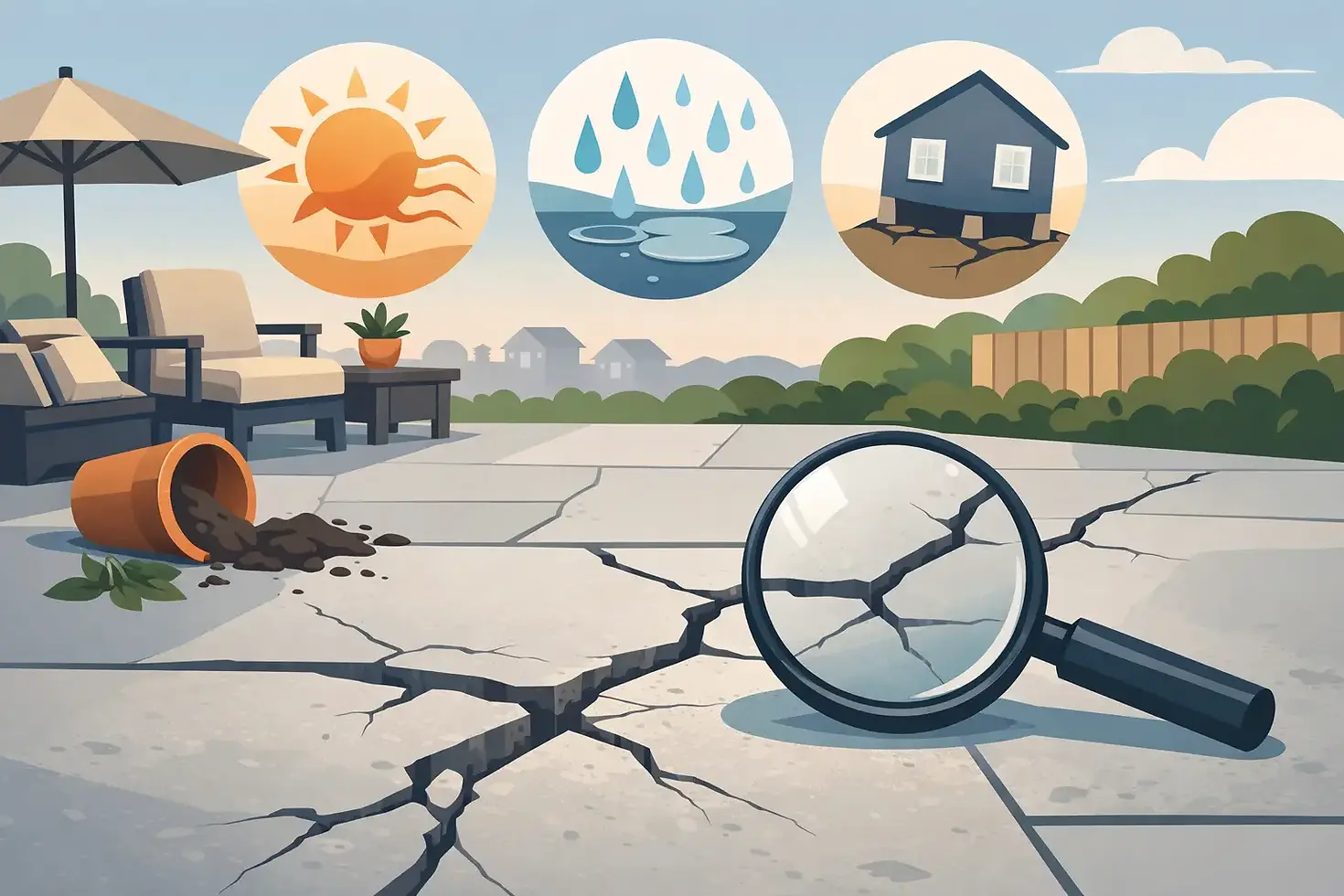
A patio can crack even when the concrete itself was mixed and finished correctly. Most patio cracking causes start below the slab, at the edges, or in the details that control where concrete is allowed to move. The crack pattern is not just cosmetic evidence. It can tell you whether you are looking at normal shrinkage, a drainage problem, unstable soil, or a patio that needs remove-and-replace work.
Concrete is strong in compression, but it has limited ability to stretch or bend. It will crack at some point. The goal of good installation is not to promise a completely crack-free patio. The goal is to build a stable slab and place joints so movement happens in controlled, less visible locations.
Patio Cracking Causes Start With Movement
Fresh concrete shrinks as it cures. Temperature changes make it expand and contract. Soil gets wet, dries out, settles, or moves. A patio also carries loads from foot traffic, furniture, grills, planters, and sometimes vehicles that should not be on a residential patio.
A properly built patio anticipates those forces. It has a compacted base, appropriate thickness, drainage away from the house, and control joints laid out at sensible spacing. When one or more of those details is missing, the concrete still moves, but it chooses its own path.
Normal Shrinkage Cracks
Hairline cracks that are narrow, relatively straight, and have little to no vertical separation are often shrinkage cracks. They can appear as the slab loses moisture during curing. This is especially common in hot, dry conditions, where the surface dries too quickly.
A small shrinkage crack does not automatically mean the patio is failing. If the slab is level, the crack is not widening, and water is not getting beneath it, sealing it may be all that is needed. Decorative finishes and lighter concrete colors can make these cracks more noticeable, but visibility is different from structural failure.
Missing or Poorly Placed Control Joints
Control joints are planned weakened lines that encourage concrete to crack where you expect it to. They are one of the most important details in patio work. Without them, or when they are too shallow, too far apart, or cut too late, random cracks become more likely.
A joint pattern should account for the patio shape, columns, steps, inside corners, and connections to existing concrete. L-shaped patios and patios with tight inside corners are common crack trouble spots because stress concentrates there. A joint should lead away from that corner rather than leaving the slab to make its own crack.
As a practical rule, joints are commonly spaced to create panels that are close to square. The exact layout depends on slab thickness, geometry, and finish, so there is no one-size-fits-all grid that works for every patio.
Weak Base Preparation and Soil Settlement
A patio is only as stable as the material beneath it. If loose native soil, fill dirt, organic material, or poorly compacted base is left under the slab, the ground can settle after installation. That leaves part of the concrete unsupported. Once the slab bends under its own weight or a concentrated load, it cracks.
This is a common reason for wider cracks and cracks with one side sitting higher than the other. A patio may also tilt toward the home or develop low spots that hold water. Those are signs to look beyond a surface repair.
In Orange County, hillside lots, irrigation, and varying fill conditions can create localized movement. In Mohave County, intense heat, dry soils, caliche, and sudden monsoon runoff can create a different set of site conditions. The solution is not the same on every property. The base and drainage plan should match the actual site, not a generic patio detail.
Water and Drainage Problems
Water is one of concrete's most persistent enemies, especially when it gets under the slab. Downspouts, planter irrigation, leaking hose bibs, overwatered landscaping, and yard drainage can wash out supporting material or repeatedly soften expansive soil.
A patio should generally slope away from the structure so water does not collect against the home. The required slope depends on the layout and drainage route, but the finished patio needs a clear path for water to leave. Flat-looking is not the same as properly drained.
Cracks that run near a wet planter, a downspout discharge, or a patio edge where water ponds deserve a closer inspection. Sealing the top of the crack without correcting the water source usually delays the next repair rather than solving the problem.
Tree Roots and Landscaping Pressure
Tree roots can lift a patio from below, particularly when large trees are planted close to the slab. Roots do not always cause visible upheaval right away. Sometimes the first sign is a diagonal crack, a raised corner, or a section of patio that no longer drains correctly.
Cutting roots is not automatically the right fix. Removing major roots can affect tree health and stability, while leaving them in place may allow continued slab movement. This is a site-specific decision that may require input from a qualified arborist along with a concrete contractor.
What the Crack Pattern Can Tell You
The width, direction, and movement at a crack matter more than whether a crack simply exists. Homeowners should pay particular attention to these conditions:
A crack with vertical displacement, often called a trip edge, points to settlement, heaving, or loss of support.
A crack that is widening over time can indicate active soil movement or drainage issues.
Multiple cracks forming a map-like pattern may be related to surface shrinkage, weak finishing practices, or a deteriorating top layer.
Cracks radiating from corners, posts, or steps often point to stress concentration and missing joint layout.
A patio section that rocks, sinks, or holds standing water likely has a base or drainage problem beneath the concrete.
Take photos and measure the crack width periodically if you are unsure whether it is active. A stable crack and an actively moving crack should not be treated the same way.
When a Repair Makes Sense
For narrow, stable cracks with no offset, a flexible concrete crack sealant can help keep debris and water out. Color-matched patch materials may improve appearance, although patches rarely disappear completely. If the goal is a uniform decorative surface, a coating or overlay may be considered only after the slab is confirmed stable.
Overlays are not a cure for movement. If the original slab is settling, lifting, or cracking from poor drainage, the overlay will usually reflect those cracks. The same is true for stamped concrete resurfacing. It can look great on a sound slab, but it is not a substitute for correcting a failing base.
Concrete lifting can be an option where a slab has settled but remains largely intact and the underlying conditions can be addressed. It is not the right answer for every patio, especially if the concrete is extensively broken, thin, poorly drained, or suffering from root pressure.
When Remove-and-Replace Is the Better Call
Remove-and-replace work is often the more durable choice when cracks have significant vertical displacement, the patio has widespread settlement, or drainage runs back toward the home. It is also worth considering when an existing patio is too thin for its intended use, has no meaningful base, or needs a redesigned shape for outdoor living.
A proper replacement starts with demolition and removal, then site evaluation. The crew can address soft areas, grade the patio for drainage, install and compact base material as needed, set forms, place reinforcement where appropriate, and install control joints before finishing the surface. That sequence matters more than trying to make a failing slab look new from the top.
For homeowners planning a new patio, this is the point to decide on practical features: drainage channels, steps, planters, walkways, poured-in-place walls, outdoor kitchen pads, and the finish itself. Broom finish, exposed concrete, and stamped concrete each have different appearance and maintenance considerations, but all need the same solid support below.
Preventing New Patio Cracks From Becoming Big Problems
No contractor can honestly guarantee that a concrete patio will never crack. What good workmanship can do is reduce the risk of random, damaging cracks and make future movement easier to manage. That means proper subgrade preparation, base compaction, drainage, realistic joint layout, timely joint cutting, and curing practices suited to the weather.
Avoid placing heavy planters or equipment near unsupported edges, keep downspouts from dumping beneath the slab, and watch irrigation around patio borders. If a crack changes, a corner rises, or water starts traveling toward the house, address the cause before a small repair turns into a larger concrete project.
The best next step is to look at the patio as a system, not just a cracked surface. A clear diagnosis of the soil, water, base, joints, and slab movement will tell you whether a simple repair is reasonable or whether it is time to rebuild the patio correctly.


Comments