

Why Concrete Flakes and How to Stop the Damage
- Aaron Barber
- 3 days ago
- 6 min read
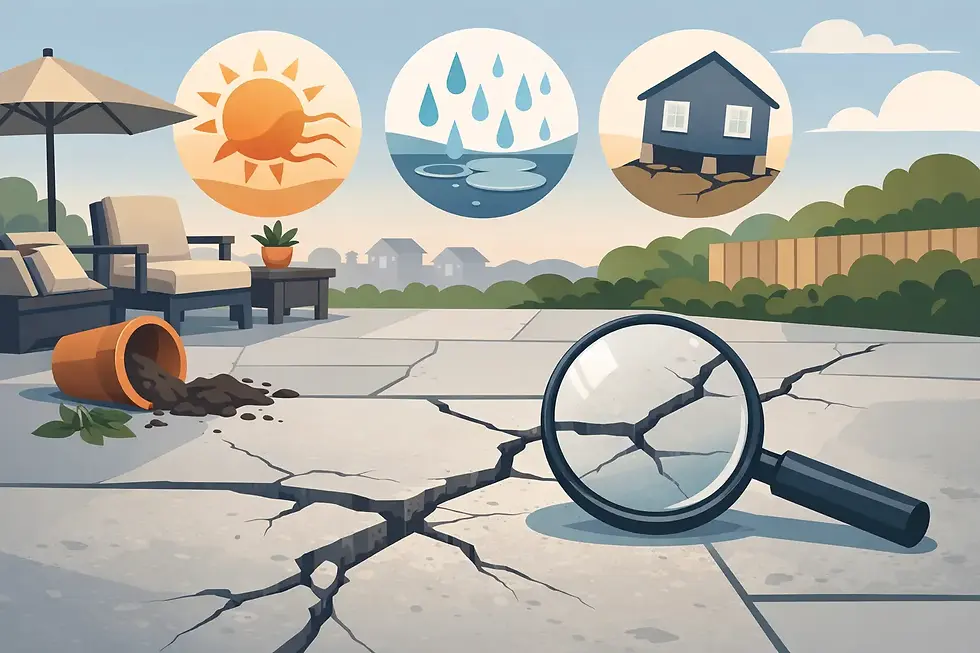
A driveway or patio can look solid for years, then start shedding thin chips that expose rough aggregate underneath. Homeowners often ask why concrete flakes when the slab is not badly cracked or settling. The short answer is that the surface paste has lost its strength or bond. The longer answer matters because a surface repair only lasts when the cause of the failure is addressed first.
Flaking is not always a reason to tear out a slab. But it is also not something to ignore and cover with paint. The right fix depends on how deep the damage goes, what caused it, and whether the concrete below the surface is still sound.
Why Concrete Flakes: Scaling vs. Spalling
Most flaking is called scaling. Scaling occurs when thin layers of the finished concrete surface break loose. It may begin as small, shallow patches and gradually spread across a driveway, pool deck, walkway, or patio. The exposed area feels rougher than the surrounding concrete because the cream layer has come off and the sand and aggregate are visible.
Spalling is generally deeper and more serious. It can involve larger chunks of concrete breaking away, sometimes exposing reinforcing steel. Spalling may result from moisture, corrosion in embedded steel, impact damage, poor concrete placement, or a combination of conditions. On a poured-in-place wall, structural slab, footing, or column, deep spalling deserves a professional evaluation before any cosmetic repair begins.
A few isolated flakes near a control joint or slab edge may be a localized issue. Widespread flaking across the walking or driving surface usually points back to the original placement, finishing, curing, or long-term exposure conditions.
The Most Common Reasons a Concrete Surface Fails
The surface was finished too early
Concrete is not ready for a final finish simply because it looks flat. After placement, bleed water rises to the surface while the heavier cement and aggregate settle. If a finisher closes that water into the slab, the top layer can become weak, dusty, and prone to scaling.
This is one of the most common installation-related causes of flaking. The surface may look good when the job is completed, but it lacks the density needed to hold up under foot traffic, tires, weather, and routine cleaning.
Water was added during finishing
Adding water to the top of fresh concrete makes it easier to work for a few minutes. It also increases the water-to-cement ratio at the surface, which lowers strength. Sprinkling water onto a slab or working bleed water back into the finish creates a weak cream layer that can later peel off.
The same problem can happen when wet tools are repeatedly used to lubricate the surface. A professional crew manages workable concrete through mix design, timing, proper placement, and finishing technique - not by watering down the face of the slab.
Poor curing left the top layer weak
Concrete needs moisture and reasonable temperature conditions to gain strength. In Orange County and Mohave County, hot sun, dry air, and wind can pull moisture from fresh concrete quickly. If the surface dries too fast, the upper portion may not cure properly.
Improper curing does not always cause immediate flaking. It can show up later as a surface that powders, wears unevenly, or starts shedding thin layers under normal use. Curing compounds, wet curing methods, sun management, and good scheduling all play a part, especially during hot-weather pours.
Freeze-thaw exposure or deicing chemicals damaged saturated concrete
Freeze-thaw damage is more common in colder regions, but it can still affect concrete exposed to occasional freezing conditions in higher desert areas. Water enters small pores and cracks. When that water freezes, it expands and can push the surface apart over repeated cycles.
Deicing products can make the problem worse. Rock salt and certain chemical deicers may contribute to surface deterioration, particularly on concrete that was already weak, poorly cured, or frequently saturated. For exterior slabs where ice treatment is necessary, use a concrete-safe product and follow its directions. Avoid assuming every deicer is safe for every driveway or walkway.
The slab was exposed to water over and over
Standing water is hard on concrete, even in a warm climate. Poor drainage at a patio edge, downspouts dumping onto a walkway, irrigation overspray, leaking planters, and low spots in a driveway all keep the slab wet longer than it should be.
Water by itself does not automatically cause scaling. But it exposes weak concrete to more wear and can carry salts, minerals, and contaminants into the surface. Before repairing flakes, correct drainage and irrigation problems. Otherwise, the repaired area may fail for the same reason.
Wear, traffic, and unsuitable coatings accelerated the problem
A garage floor, driveway turnaround, or commercial entry sees more abrasion than a backyard patio. Tire traffic, turning wheels, pressure washing too aggressively, and repeated scraping can wear down a poor surface faster.
Some coatings also fail because moisture is moving through the slab or because the concrete was not prepared correctly before application. When a coating peels, it can look like the concrete is flaking. Check whether you are seeing failed paint or sealer, actual concrete loss, or both. The repair approach is different.
How to Tell Whether a Repair Makes Sense
Start by looking at depth and coverage. If the flakes are shallow, the concrete underneath is hard, and the slab is generally level with no major cracking, a properly prepared resurfacing or repair system may be a practical option. Sound concrete is the key. A patch cannot create a durable surface over weak material.
Test questionable areas by tapping them with a hammer. Hollow-sounding spots, loose edges, and material that breaks apart easily should be removed until solid concrete is reached. This does not replace a field inspection, but it helps show whether the damage is limited to the surface.
Remove-and-replace work is often the better value when flaking is widespread, the slab has significant settlement or cracking, or the surface is failing in multiple layers. Repeated patching can become more expensive than replacing a driveway, patio, or walkway correctly once.
For structural elements, do not make the decision based on appearance alone. Deep spalling on foundations, walls, columns, or slabs with exposed reinforcing steel may indicate a water or corrosion issue that needs to be corrected as part of the repair.
Repairing Flaking Concrete the Right Way
The repair starts with preparation, not a bag of patch material. All loose, weak, contaminated, or unsound concrete must be removed. The remaining surface needs to be clean, mechanically profiled, and free of curing compounds, paint, oil, and dust that could prevent bonding.
For shallow scaling, a polymer-modified repair mortar or resurfacing system may work when installed at the manufacturer’s required thickness. The material must be selected for the intended use. A driveway repair needs a product rated for vehicle traffic, while a vertical wall repair requires a mix that can stay in place without sagging.
Deeper repairs may need formed edges, bonding agents, reinforcement treatment, or a partial-depth concrete replacement. Large patches should not be feathered to nothing at the edges unless the repair material specifically allows it. Thin feather edges are where many patches begin to fail.
Once repaired, curing still matters. Protect the work from direct heat, rapid drying, early traffic, and water exposure according to the material instructions. Skipping this part can turn a good repair product into another failed surface.
Preventing More Flaking on New Concrete
The best prevention happens during installation. Use an appropriate mix for the application, place it on proper base material, maintain the correct slab thickness, and install joints where they belong. Then finish the concrete at the right time without adding water to the surface.
For driveways, patios, walkways, and decorative concrete, drainage should be part of the plan. Concrete needs intentional slope so water moves away from the house and does not pond on the surface. Landscaping, irrigation, and downspouts should support that drainage rather than fight it.
After the concrete has fully cured, a suitable penetrating sealer can help reduce water and contaminant absorption. Sealer is maintenance, not a cure for weak concrete. It will not stop an active scaling problem or fix a slab that was improperly placed.
If you are considering stamped concrete, exposed aggregate, or another decorative finish, the same rules apply. Decorative work adds finish requirements, but it does not change the fundamentals of good placement, curing, joints, and drainage.
A few concrete flakes may be a manageable surface repair. Widespread flaking, deep breakouts, or exposed steel call for a closer look before money goes into patching. The useful question is not just why the surface failed - it is whether the concrete beneath it is still worth saving.


Comments